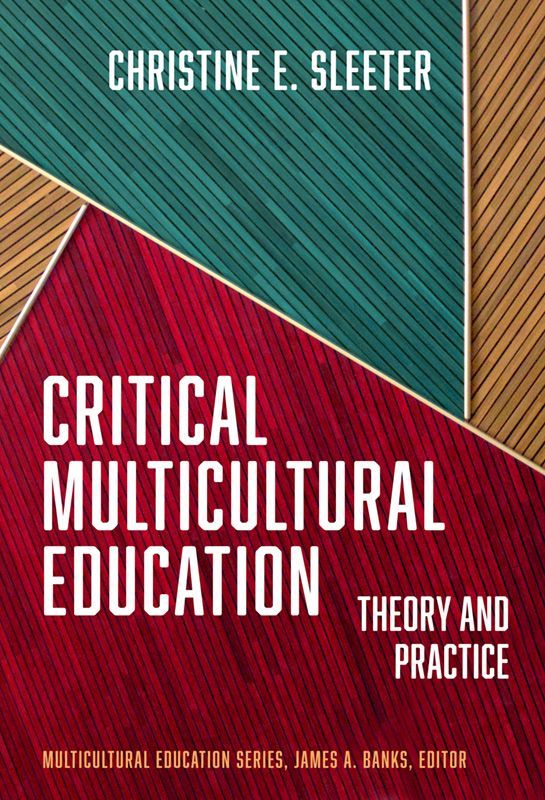
Critical Multicultural Education
Sleeter, C. E., 2024. New York: Teachers College Press.
This volume collects Christine Sleeter’s core work focusing on critical multicultural education, situating culture and identity within an analysis of power and racism. Multicultural education arose in the context of the Civil Rights Movement and, in its inception, shared with that movement a focus on eradicating both interpersonal and systemic racism. The problem this book takes up is that, over time, many people have come to understand and enact multicultural education in ways that evade grappling directly with racism. This volume includes ten of Sleeter’s articles that explicitly locate multicultural education within critical understandings of race, racism, and colonialism, offering both theoretical and practical discussions of what that means.
As conservatives across the country launch all-out attacks against any form of diversity in schools, Christine Sleeter’s
Critical Multicultural Education: Theory and Practice is an important intervention on the side of racial justice in education.
Wayne Au, editor,
Rethinking Schools, and professor, UW Bothell School of Educational Studies
Christine Sleeter has been a brilliant and courageous thought leader in critical multicultural education (CME) for over two decades, breaking with white solidarity long before it was acceptable in mainstream discourse. I consider her a foundational mentor whose work has had a profound influence on how I understand and articulate the dynamics of systemic racism and the role of white people in achieving racial justice. This beautiful and intersectional volume traces the trajectory of CME from its inception to the present time, delineating the resistance it has faced and speaking back to current forms of backlash with clarity and nuance.
Critical Multicultural Education needs to be required reading in every school of education.”
Robin DiAngelo, author of
Is Everyone Really Equal?,
White Fragility, and
Nice Racism
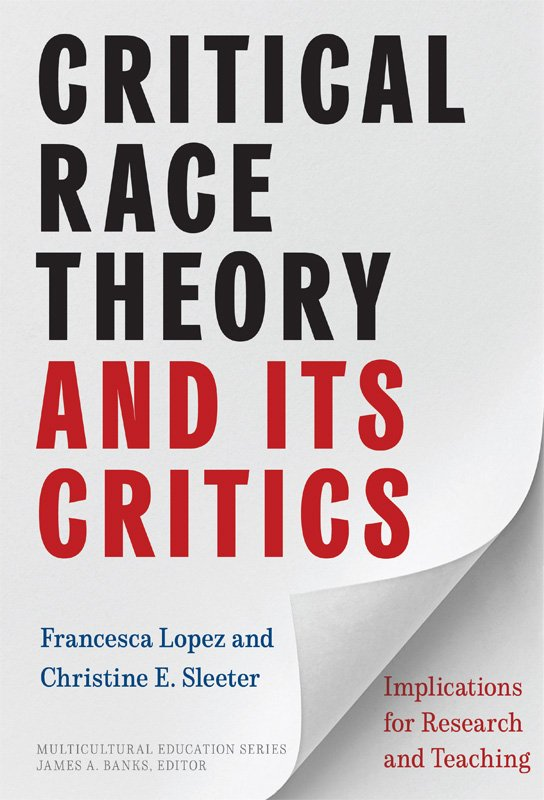
Critical Race Theory and its Critics
López, F. & Sleeter, C. 2023. New York: Teachers College Press.
Who and what are behind the attacks on Critical Race Theory (CRT)? Why are attacks on the teaching of racism happening now and what can be done about them? In this book, López and Sleeter answer these questions in an effort to intentionally and strategically provide readers with sustainable tools for teaching toward an equitable future. This comprehensive book includes an overview of today’s controversy surrounding CRT; a historical account of efforts to thwart fair and unbiased education opportunities; research on why these efforts have been successful; and ways for teachers, school leaders, and researchers to address this pushback in their own work. Contrary to claims by critics of CRT, research supports that addressing racism in the classroom is an integral part of a broader effort in ensuring that all children thrive. Written in an accessible style for a broad audience, Critical Race Theory and Its Critics offers evidence-based recommendations on messaging (including social media), organizing, and sharing research.

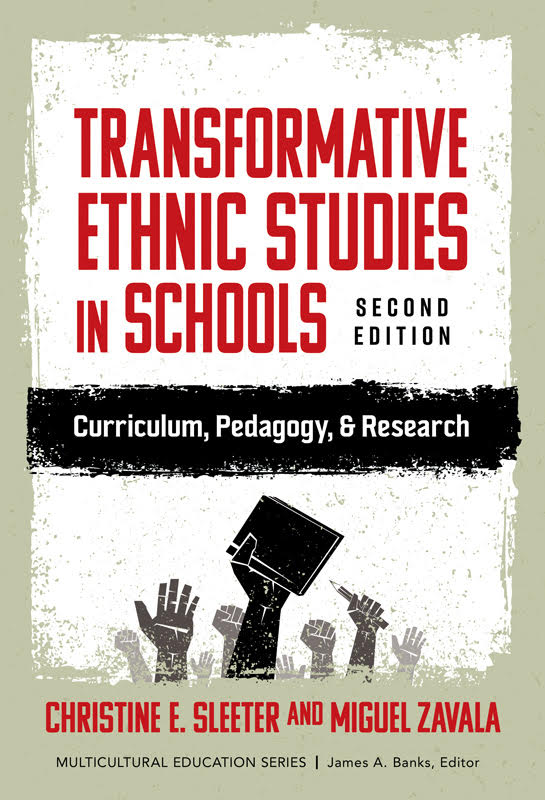
Sleeter, C. E. & Zavala, M. 2026. Transformative Ethnic Studies in Schools: Curriculum, Pedagogy and Research, 2nd Ed. New York: Teachers College Press.
This timely and compelling book conceptualizes Et hnic Studies not only as a vehicle to transform and revitalize the school curriculum but also as a way to reinvent teaching. The authors show how the traditional curriculum’s Eurocentric view of the world affects diverse student populations. The text highlights several contemporary exemplars of curricula—from classroom level to district or state-wide—illustrating core concepts in Ethnic Studies across a variety of disciplines and grade levels. Interviews with students who experienced Ethnic Studies in high school shed light on what students find most significant about Ethnic Sudies. A final chapter considers how research on P–12 ethnic studies can be conceptualized and conducted in ways that further both advocacy and program sustainability.
Chapter Three, "What the Research Says about Ethnic Studies," was reprinted by the National Education Association, where you can
download it.

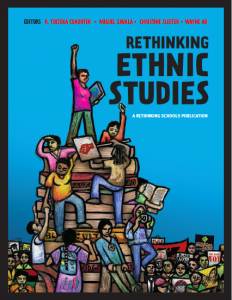
Rethinking Ethnic Studies.
Cuauhtin, R. T., Zavala, M., Sleeter, C. & Au, W. 2019.
Milwaukee, WI: Rethinking Schools, Ltd.
Gloria Ladson-Billings, University of Wisconsin-Madison and President, National Academy of Education
Kevin Kumashiro, author of Bad Teacher!
Antonia Darder, Leavey Endowed Chair of Ethics & Moral Leadership, Loyola Marymount University
Nolan L. Cabrera, University of Arizona
Un-standardizing Curriculum
Sleeter, C. E. & Flores Carmona, J. 2017. Un-standardizing Curriculum: Multicultural Teaching in the Standards-Based Classroom, 2nd ed. New York: Teachers College Press.
Diversifying the Teacher Workforce
Sleeter, C. E., Neal, L. I., & Kumashiro, K. K. Eds. (2014). Diversifying the Teacher Workforce: Preparing and Retaining Highly Effective Teachers. New York: Routledge.
Power, Teaching, and Teacher Education
Sleeter, C. E. 2013. Power, Teaching, and Teacher Education: Confronting Injustice with Critical Research and Action. New York: Peter Lang.
Nominated for the 2015
AERA Outstanding Book Award
Creating Solidarity across Diverse Communities
Sleeter, C. E. & Soriano, E., Eds. 2012. Creating Solidarity across Diverse Communities: International Perspectives. New York: Teachers College Press.
School Education, Pluralism and Marginality
Sleeter, C. E., Upadhyaya, S. B., Mishra, A. & Kumar, S., Eds. 2012. School Education, Pluralism and Marginality: Comparative Perspectives. Andhra Pradesh, India: Orient Black Swan.
Professional Development for Culturally Responsive and Relationship-based Pedagogy
Sleeter, C. E., Ed. 2011. Professional Development for Culturally Responsive and Relationship-based Pedagogy. New York: Peter Lang.
Teaching with Vision
Sleeter, C. E. & Cornbleth, C., Eds. 2011. Teaching with Vision: Culturally Responsive Teaching in Standards-Based Classrooms. New York: Teachers College Press.
Choice Outstanding Academic Title, 2011
From the Foreword by Bill Bigelow, Rethinking Schools & Linda Christensen, Lewis and Clark College
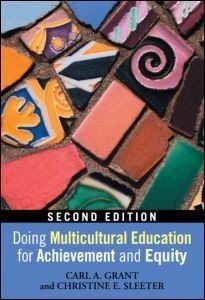
Doing Multicultural Education for Achievement and Equity
Grant, C. A, & Sleeter, C. E. 2011. Doing Multicultural Education for Achievement and Equity, 2nd. ed. New York: Routledge; translated into Korean.
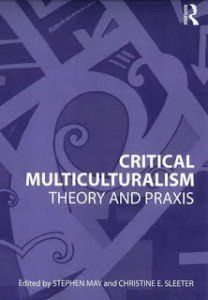
Critical Multiculturalism: Theory and Praxis
May, S. & Sleeter, C. E., Eds. 2010. Critical Multiculturalism: Theory and Praxis. New York: Routledge.
Making Choices for Multicultural Education
Sleeter, C.E. & Grant, C.A. 2009. Making Choices for Multicultural Education, 6th ed. New York: Wiley; translated into Korean.
Turning on Learning: Five Approaches for Multicultural Teaching Plans
Grant, C.A. & Sleeter, C.E. 2009. Turning on Learning: Five Approaches for Multicultural Teaching Plans, 5th ed. New York: Wiley
Facing Accountability in Education: Democracy and Equity at Risk
Sleeter, C. E., Ed. 2007. Facing Accountability in Education: Democracy and Equity at Risk. New York: Teachers College Press.
Culture, Difference and Power
Sleeter, C. E. 2001. Culture, Difference and Power. New York: Teachers College Press.
Review by Sigrun Biesenbach-Lucas, Language Learning and Technology.
Multicultural Education as Social Activism
Sleeter, C. E. 1996. Multicultural Education as Social Activism. New York: SUNY Press.
Multicultural Education and Critical Pedagogy: The Politics of Difference
Sleeter, C.E. & McLaren, P., Eds. 1995. Multicultural Education and Critical Pedagogy: The Politics of Difference. New York: SUNY Press.
After the School Bell Rings
Grant, C. A. & Sleeter, C. E. 1996. After the School Bell Rings, 2nd ed. Falmer Press.

Developing Multicultural Teacher Education Curricula
Larkin, J. & Sleeter, C. E., Eds. 1995. Developing Multicultural Teacher Education Curricula. New York: SUNY Press
Keepers of the American Dream: Multicultural Education and Staff Development
Sleeter, C. E. 1992. Keepers of the American Dream: Multicultural Education and Staff Development. Falmer Press.
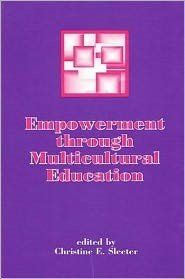
Empowerment through Multicultural Education
Sleeter, C.E., Ed. 1991. Empowerment through Multicultural Education. New York: SUNY Press.